

Super Antioxidant Mushroom & Steamed Pork with Sesame Koji Dressing
Updated: Feb 24
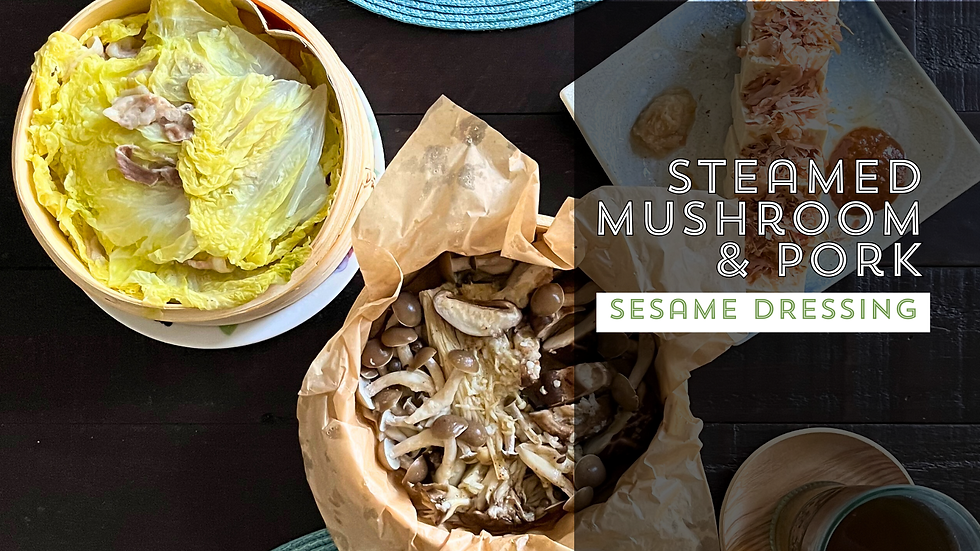
A powerhouse of antioxidants, prebiotics, and probiotics in one simple, delicious steamed dish.
CONTENTS
ABOUT THIS RECIPE |
This recipe highlights the natural umami and health benefits of mushrooms and napa cabbage, paired with tender pork and a creamy sesame koji dressing. Steaming keeps nutrients intact while enhancing flavor, making it a perfect gut-friendly dinner.
RECIPE OVERVIEW |
Prep Time: 10 minutes
Cook Time: 10 minutes
Total Time: 20 minutes
Serving Size: 2
Cuisine: Japanese-inspired, Gut Health Cooking
Equipment Needed: Steamer (Seiro or other), mixing bowl
Difficulty Level: Easy
Suitable For: Gluten-free, Dairy-free
NUTRITION & GUT HEALTH BENEFITS |
Mushrooms: Rich in beta-glucans, antioxidants, and prebiotic fiber that feed beneficial gut bacteria.
Napa Cabbage: Adds vitamin C, hydration, and fiber to support digestion.
Pork: Provides high-quality protein, supporting gut lining repair.
Koji Ferments: Boost digestion with enzymes and natural probiotics.
Sesame Seeds: Contain healthy fats and lignans that may lower inflammation and support digestion.
INGREDIENTS |
Mushroom Mix
Maitake – 50–70g
Shiitake – 50–70g
Enoki – 50–70g
Shimeji – 50–70g
Salt Koji – 1 tbsp
Rice Vinegar – 1 tbsp
Olive Oil – 2 tbsp
Black Pepper – to taste
Steamed Pork & Napa Cabbage
Thinly sliced pork belly or pork loin (shabu-shabu style)
4–5 napa cabbage leaves
Homemade Sesame Dipping Sauce
3 tbsp toasted white sesame seeds
1 tbsp Soy Sauce Koji
1 tbsp Ama Koji
1 tbsp Sesame Oil
1 tbsp Rice Vinegar
INSTRUCTIONS |
1. First Bamboo Steamer Layer:

Line a steamer with parchment paper. Place mushrooms inside and drizzle with salt koji, vinegar, olive oil, and black pepper.
2. Second Bamboo Steamer Layer:

Arrange napa cabbage and pork slices alternately in layers.
3. Steam:

Stack the pork & cabbage layer at the bottom, mushrooms on top. Cover and steam for about 10 minutes until pork is cooked through.
4. Salt-Koji Mayo & Sesame Seed Dressing:

While steaming, whisk all dressing ingredients until smooth and emulsified.
SHOPPING TIPS |
SALT KOJI:

Make Your Own Salt Koji at Home:
Whenever possible, I recommend making salt koji at home. With just rice koji, salt, and water, you get fresher flavor and full control over ingredient quality.
Pre-made salt koji is also available at Japanese grocery stores if homemade one isn't for you.
Look for:
Refrigerated product
Simple ingredients (rice koji, salt, water)
No added alcohol, preservatives, or sugar
It can be difficult to find high-quality salt koji online because it must be refrigerated to maintain proper fermentation quality. I recommend purchasing it locally when possible.
SOY SAUCE KOJI:

Make Your Own Soy Sauce Koji at Home:
Homemade soy sauce koji using high-quality soy sauce and rice koji allows you to avoid preservatives. The flavor is noticeably more balanced when made fresh.
Pre-made soy sauce koji is also available at Japanese grocery stores if homemade one isn't for you.
Look for:
Refrigerated product
Simple ingredients (soy sauce + rice koji only)
No added sugar or unnecessary additives
Because this is a live fermented product, it is rarely available online in good condition due to refrigeration requirements. Local Japanese markets are your best option.
Choose clean, simple ingredients for best flavor.
AMA (SWEET) KOJI:

Ama koji is rarely available as a standalone product in stores. I always recommend making it at home if possible, since it is simple and contains only rice koji and water.
If you prefer a ready-made option, Hakkaisan’s Koji Amazake is very close to homemade ama koji. It uses only high-quality koji and water, without added sugar or unnecessary ingredients. You can often find it at Japanese grocery stores.
Choose the simplest ingredient list possible — quality matters.
RICE VINEGAR:

Rice vinegar should be simple.
Pure rice vinegar (純米酢) is made only from:
Rice
That’s it.
This is the only rice vinegar I personally use. The flavor is gently sweet from the rice itself, with a mild, rounded acidity that works beautifully in sunomono (vinegared dishes), dressings, and light Japanese cooking.
Be careful — many rice vinegars sold in stores are seasoned rice vinegar, which contain added sugar and sodium. These added ingredients can completely change the flavor balance of a recipe.
JAPANESE MORTAR & PESTLE (Suribachi & Surikogi)

A Japanese mortar and pestle — called suribachi (mortar) and surikogi (wooden pestle) — is an essential tool in traditional Japanese kitchens.
Unlike Western smooth mortars, the inside of a suribachi has fine ridges that help grind ingredients more efficiently.
I especially love using it for freshly ground sesame seeds. When sesame is ground just before serving, the aroma and flavor are completely different — richer, nuttier, and more vibrant.
New to Seiro Steaming? Start Here:

If you're curious about which bamboo steamer (seiro) to choose, sizes, materials, and the tools I personally use, I’ve put everything together in my Seiro 101 guide. It will help you select the right setup for your kitchen.
Also, learn more about 👉 the gut health benefits of steaming foods.
SERVING SUGGESTIONS |
Swap in seasonal vegetables like carrots, daikon, or zucchini.
Try different mushroom varieties — all work beautifully in this dish.
Make extra dressing and store in the fridge for up to one week; it’s delicious on tofu, other steamed vegetables, or as a salad dressing.
FINAL THOUGHTS |
This recipe is a simple yet powerful way to nourish your gut and body. The steaming method preserves nutrients, while the fermented sesame dressing adds deep umami and probiotic benefits. Perfect for a quick weekday dinner that feels wholesome and satisfying.


Comments