

Azuki [Red Beans] Koji Amazake(小豆甘酒)Sweet Red Bean Meets Fermented Goodness
Updated: Feb 23
![Red beans pour into a pot on a stove, with pink azuki koji amazake shown on a spoon by a container. Text: "Azuki [Red Beans] Koji Amazake."](https://static.wixstatic.com/media/cb9ac0_4ae366249a494eabaa97226f7732e363~mv2.png/v1/fill/w_980,h_551,al_c,q_90,usm_0.66_1.00_0.01,enc_avif,quality_auto/cb9ac0_4ae366249a494eabaa97226f7732e363~mv2.png)
A modern twist on traditional amazake using azuki beans. This naturally sweet, antioxidant-rich drink supports your digestion while satisfying your sweet tooth.
CONTENTS
GUT HEALTH BENEFITS |
Azuki beans add fiber, iron, and polyphenols
Rice koji offers enzymes for digestive support
Naturally sweet with no added sugar
Great alternative to sugar-heavy red bean desserts
Gluten-Free / Vegan / No added Sugar
INGREDIENTS | (Makes about 600ml)
350g Porridge
150g Cooked Azuki Beans
100g Rice Koji
Optional: 50-100ml Warm Water (~60°C / 140°F) if it’s too thick
INSTRUCTIONS:
Sterilize your tools: Place all utensils and containers in boiling water for at least 8 minutes. Use only heat-resistant, BPA-free glass or plastic. Let air dry completely. Learn how to sterilize tools
Cook Azuki [red beans]:
Rinse azuki beans very well and boil in 1 litter water for 5 minutes
Drain the water
Boil azuki beans again in 1 liter water for an hour or until soft (but not mushy).
Drain the water - save the cooking water, it’s full of nutrients. (you can enjoy the Azuki water warm like tea or chilled in the fridge for up to a week.)
Allow the azuki to cool to below 60°C (140°F).
Make Porridge:
Soak 0.5 cup of rinsed rice for at least 30 minutes.
Add the drained rice in 700ml water and boil uncovered.
Lower the heat to a gentle simmer for about 25 minutes, stirring occasionally.
After 25 minutes, turn off the heat, cover and let it steam for 5 minutes.
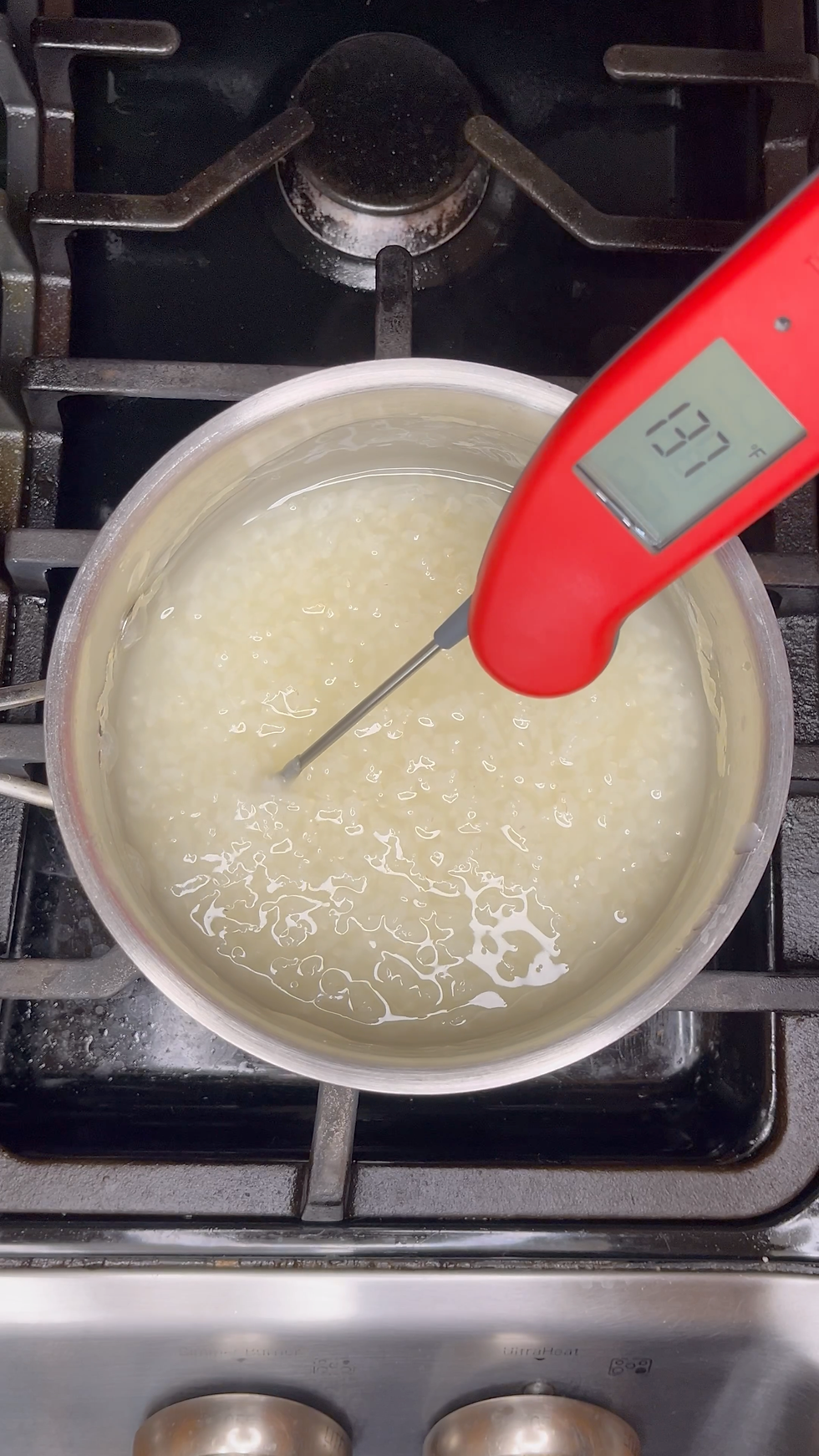
Allow the porridge to cool to below 60°C (140°F).
In a sanitized container, combine the cooked azuki, porridge, rice koji, and water.
Place the container in your fermentor and set it to 58°C - 60°C (136°F - 140°F) for 8 hours. Alternatively, you can use sous vide (my recommendation: Anova Sous Vide Precision Cooker 3.0), or rice cooker with a warm setting. The key is the temperature control!
Blend for a smoother consistency if preferred.
Cool and Store: Let it cool, then transfer to a clean jar. Store in the fridge up to 7 days.
![Red beans [azuki] boiling in a pot on a stove. The pot is filled with water, forming bubbles. The stove has a metallic finish.](https://static.wixstatic.com/media/cb9ac0_3c14d686bb6f4df7ae787eba60b87121~mv2.png/v1/fill/w_980,h_1742,al_c,q_90,usm_0.66_1.00_0.01,enc_avif,quality_auto/cb9ac0_3c14d686bb6f4df7ae787eba60b87121~mv2.png)

SERVING SUGGESTIONS OF AZUKI KOJI AMAZAKE |
Enjoy warm or chilled as a nourishing drink
Recommended serving size: 1/2 cup - 1 cup a day
Enjoy as a breakfast drink or light dessert with mochi
Use in place of sweet red bean paste in traditional sweets
SHOPPING TIPS |
Miyako RICE KOJI:

UPDATED on 2/19/2026:
I recently found this dried koji (made in Japan) on Amazon, and it has become my new go-to for homemade miso and all of my koji-based seasonings.
This brand is more cost-effective while still maintaining excellent quality. The grains are consistent, the fermentation is stable, and the flavor develops beautifully — especially for miso, salt koji, soy sauce koji, and amazake. Good koji is the foundation of everything. If your koji is high quality, your final product will naturally taste more balanced and deeply umami-rich.
This is the one I personally use now in my kitchen.
Oryzae RICE KOJI:

UPDATED on 2/19/2026:
This is another excellent dried koji option available on Amazon, also made in Japan.
It is slightly more expensive than my current go-to brand, but the quality is very good. If my primary choice isn’t available, this is the one I purchase.
One thing I always tell my students: try a few different koji brands. Just like wine or miso, there are subtle differences in aroma, sweetness, and enzymatic strength. Over time, you’ll find the one that fits your preference and cooking style. Quality koji truly makes a difference.
Other RICE KOJI:

Look for dried rice koji at Japanese or Asian grocery stores in the refrigerated section or online. Brands like Cold Mountain, Marukome, or Hikari are reliable. Japanese supermarkets often carry a few different kinds of KOJI. Online retailers like Nijiya, Mitsuwa, Marukai, Amazon, or Japanese Pantry shops are good options!
AZUKI [RED BEANS]:

Avoid Pre-sweetened or Canned Azuki (or Adzuki) - These are already cooked with sugar (like for anko paste) and are not suitable for amazake or fermentation recipes. Instead, choose Whole, Dried Azuki Beans. Azuki from Hokkaido is considered the highest quality in Japan — plump, sweet, and holds shape well after cooking.
However, if that's not possible to purchase, try the one I found on Amazon which I use it for myself.
FINAL THOUGHTS |
Azuki Koji Amazake is a naturally sweet and nourishing treat—perfect for those who love red beans but want a gut-friendly, health-conscious twist. It’s comforting, wholesome, and uniquely satisfying.


Comments